
"Winning isn't everything; it's the only thing."
Fred Trueman
Return to the book list for this category.
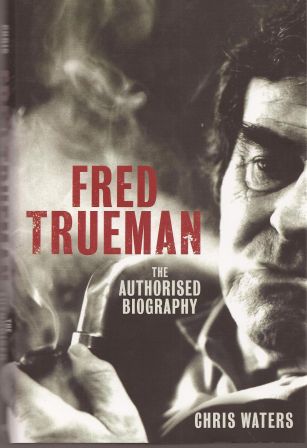
The authorized biography, Chris Waters, London, Aurum, 2011, ISBN 978 184513 453 2
For people of my age, Fred Trueman’s 300th test wicket is a moment we will always remember, albeit the images are in black and white. Trueman was a truly great bowler. As the book says “Spectators in those days didn’t just go to watch Yorkshire play, or to see England in action. They went along to see Fred bowl”. In the second innings of his first test for England in 1952, he took three early wickets to reduce India to 0-4.
An abiding sadness in the book is his relationship with Yorkshire. When the author met Trueman late in life and “enquired what Yorkshire had done to upset him. He fired back: ‘How bloody long have you got?’ Then, without hesitation, he reeled off a list”.
What rankled him most was “being voted off the off the Yorkshire committee and replaced by some bloke with a deaf aid from Keighley”. Or in the author’s more measured tone “The greatest living name in Yorkshire cricket – greater even than Boycott – was snubbed by Yorkshire’s members in favour of someone with no connection to the first-class game”.
Freddie’s wit was legendary - after dismissing a batsman cheaply he was wont to say “Hardly worth dressing up for, were it?” and if the batsman played and missed “that ball were wasted on thee.” Interestingly the book states that “Fred never swore directly at batsmen or umpires; never went in for the sledging that goes on today”. And, of course, there was the one to David Sheppard when he dropped a catch and Fred told him to put his hands together and pretend he was praying!
Geoffrey Boycott is quoted as saying “Fred was by far the funniest man I played with and I used to want to field as close to him as possible because he would always come out with something that would have you rolling about with laughter”.
There was a less agreeable side to him. He disliked signing autographs and might tell the fan to “bugger off or something stronger if they approached him in the wrong way, at the wrong time or in the wrong place”. He expected to be called Mr Trueman. Don Mosey wrote of him: “He became a great bowler but, in many ways, a less loveable human being”.
He bore grudges a long time. When invited to Mike Smith’s seventieth birthday party, which Warwickshire were putting on. He replied to the invitation with the words, “He left me at home in 1964-65 – and I’m stopping at home now”. Nearly 40 years later.
A surprising aspect of the book was to read of his developing Christian faith in later life which brought him great contentment. He believed in God throughout his life but did not practise thoughout most of his adult life. The book records several statements of his thankfulness to God for all the good things in his life. Visiting the Holy Land and “walking in the footsteps of Jesus deepened his Christian devotion”.
For years he and Geoff Boycott did not speak. When Boycott got cancer, Fred rang him. The first stage in the rapprochement was when Fred started to pray for him.
He himself died of cancer “fortified by those he loved and his faith in God. The man who couldn’t face the death of his own relatives, who couldn’t physically place his Yorkshire cap on top of his father’s coffin because he was too upset, himself passed away with dignity and courage. ‘Fred knew he was dying, his family knew he was dying and I knew he was dying,’ said Reverend Ward. ‘But he was prepared to accept that the God who’d been good to him in life wouldn’t desert him in his hour of need. In his final hours, Fred was brave and didn’t go to pieces as some people do. He held himself together extremely well.’”